

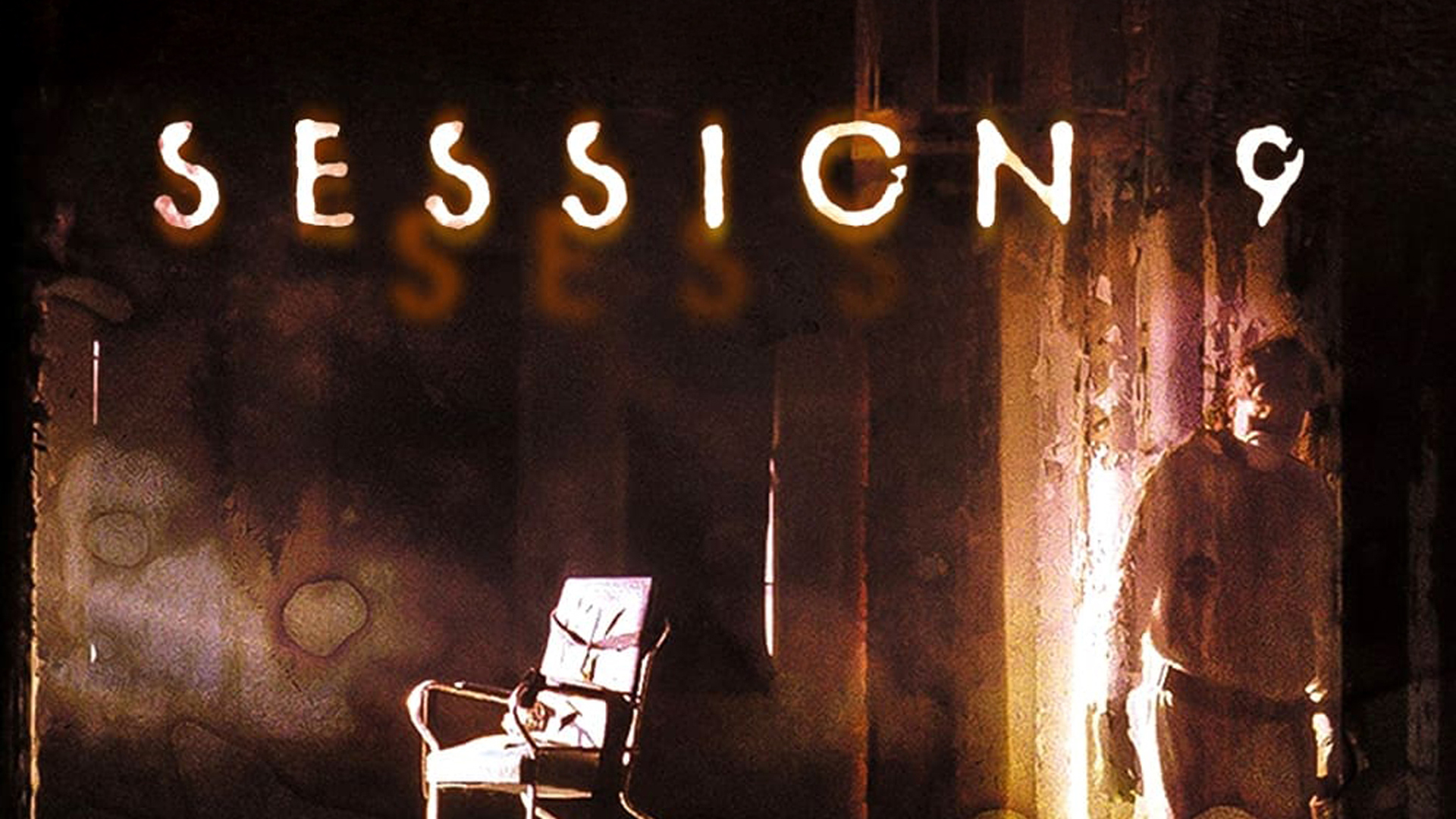
Preview
If you enjoy watching blue-collar handymen inhale toxic black mold while slowly losing their grip on reality, dust off your remote because Session 9 is waiting for you on streaming. Directed by Brad Anderson back in 2001, this psychological slow-burn skips the usual cheap slasher nonsense and instead traps five sweaty guys inside the real-life, rotting corridors of the Danvers State Mental Hospital in Massachusetts. Their job is simple: scrape dangerous asbestos out of an abandoned madhouse in less than a week to cash a desperately needed paycheck. Naturally, things go completely sideways before anyone even unpacks a thermos.
Instead of rubber-masked killers jumping out of closets, this flick bets its entire mortgage on creeping dread, grimy 24p digital video, and audio recordings of a brutally traumatized patient named Mary Hobbes. It is bleak, it is dirty, and it is a stark reminder of what low-budget indie filmmaking looked like right before Hollywood decided every horror movie needed to feature twenty-something influencers running around in tight tank tops screaming at CGI ghouls.
Review by Ben Dover
Listen, I am sixty years old, and I do not have the patience for modern cinema nonsense. Half the garbage these kids watch on their phones today looks like a seizure inside a blender. So when I finally sat down to watch Session 9 after twenty-five years of horror geeks whining that it was an overlooked masterpiece, I went in fully prepared to tear it a brand-new exhaust pipe. I was ready to roast it over an open fire. Much to my annoyance, I actually liked the damn thing.
The story drops an asbestos abatement crew into an enormous, decrepit loony bin. Right away, you can practically smell the asbestos, pigeon droppings, and bad life choices radiating off the screen. What makes the whole mess work is that the guys actually behave like miserable bastards who work forty hours a week for a living. They hate each other, they steal small kickbacks behind each other’s backs, and their boss is so stressed out about money he looks like he might drop dead of an ulcer by lunchtime. It feels like real work, which is something Hollywood writers haven’t experienced since the Eisenhower administration.
The real star of this flick is not even an actor. It is the Danvers State Hospital itself. Back when they shot this, the place was legitimately decaying and abandoned before some idiot developers tore most of it down to build luxury condos. Who in their right mind pays two grand a month to live inside a renovated lobotomy clinic? Not me, pal. Brad Anderson shoots the endless, peeling hallways during broad daylight, which is ten times creepier than drowning the scene in pitch-black shadows just to hide a cardboard prop.
Now, don’t get me wrong, because I wouldn’t be Ben Dover if I didn’t find something to gripe about. The early-2000s digital video tape they shot on looks cheap in spots, like somebody borrowed a camcorder from a high school graduation. Plus, there is one particular line delivery where David Caruso screams an obscenity that is so unintentionally hilarious it pulled me right out of my dread and made me laugh out loud. If you want high-art Shakespeare, look elsewhere.
Still, as a nasty little psychological throat-punch, it gets the job done better than ninety percent of the bloated CGI jump-scare trash polluting streaming services today. It gets inside your skull, rattles around, and leaves you feeling like you need a scalding shower with industrial lye soap.
Cast & Characters
- David Caruso (Phil): The bitter, chain-smoking ex-partner of the business who is stewing in pure resentment because Gordon stole his girlfriend. Caruso plays Caruso, complete with dramatic squints and tough-guy scowls, but here the jerk attitude actually fits like a glove.
- Peter Mullan (Gordon Fleming): The weary, sleep-deprived owner of the hazmat crew. Mullan is fantastic at looking like a man whose soul left his body three weeks ago. Between a newborn baby at home and mountain-high debts, he is a walking nervous breakdown.
- Stephen Gevedon (Mike): A law-school dropout who works the job just to kill time. He finds a box of therapy reel-to-reel tapes documenting a patient with multiple personalities and spends half his work shift secretly listening to them instead of scraping pipes.
- Josh Lucas (Hank): The handsome, arrogant loudmouth of the crew who talks trash, gambles too much, and stumbles upon a secret stash of antique silver and valuable coins hidden behind a crematorium wall.
- Brendan Sexton III (Jeff): Gordon’s skittish nephew who has a mortal fear of the dark. Naturally, he gets assigned to work in pitch-black tunnels. The kid spends the whole movie looking like he is about to cry into his sandwich.
Special Effects & Music
- Special Effects: You won’t find flashy computer graphics here, thank God. The blood and gore are kept practical, nasty, and minimal. The decaying set does all the heavy lifting. Flaking lead paint, rusted gurneys, and actual medical debris deliver more horror than any twenty-million-dollar CGI studio monster could dream of.
- Music & Sound: The sound design is downright nasty. Composers Climax Golden Twins provide a low, droning, metallic ambient score that sounds like someone dragging a pipe across concrete in an empty room. Layer that with the scratchy, crackling playback of the reel-to-reel psychiatric tapes, and the audio alone will give you the creeps.
Rating
4 out of 5 Stars
Asbestos poisoning never looked so fun, but it loses a full star because Caruso’s dramatic tough-guy scream made me spill my ginger ale.
Complete Synopsis & Plot Breakdown
Gordon Fleming runs a struggling hazmat abatement company in Massachusetts. Desperate for cash to support his wife and infant daughter, Gordon bids on a massive contract to clear hazardous asbestos from the abandoned Danvers State Mental Hospital. To beat out his competitors, he recklessly promises to finish a three-week cleanup in just five days. He gathers his crew: his resentful former partner Phil, law school dropout Mike, the reckless hotshot Hank, and his nervous young nephew Jeff.
As work begins on Monday, Gordon is clearly unraveling from stress and lack of sleep. While exploring the basement, Mike discovers a box of audio recordings containing nine taped psychiatric sessions from 1974. The tapes chronicle Dr. Wooding treating Mary Hobbes, a young woman who was committed after committing a violent murder at her family home. Mary suffers from multiple personalities, including a timid girl named Princess and a protective boy named Billy.
Meanwhile, Hank discovers a hidden cavity behind a basement wall containing antique half-dollars and surgical silverware. He sneaks back into the asylum alone late Monday night to steal the loot, but while stuffing his pockets, he hears a strange noise and is attacked in the dark by an unseen figure.
By Tuesday, Hank is missing. Phil assumes he took the money and skipped town. The pressure mounts, and Gordon’s mental stability deteriorates further. Mike continues listening to Mary’s therapy tapes in secret, completely fascinated by her references to a mysterious, hidden third personality that Dr. Wooding has not yet unlocked.
On Thursday, Hank suddenly wanders back into the building in broad daylight, dazed, shirtless, and completely catatonic with a tiny patch of tape on his eye. Chaos erupts. Jeff panics during a power outage in the pitch-black basement tunnels and is violently stabbed to death with an industrial lobotomy needle. Phil confronts Gordon, realizing something is terribly wrong, but is ambushed and murdered. Mike heads down to the basement to shut off the generator, finds Hank dead on a gurney with a needle through his eye, and is struck down from behind.
The final reel-to-reel recording, Session 9, plays in full. In the recording, Dr. Wooding finally wakes Mary’s dominant, homicidal alter ego, who identifies himself as “Simon.”
A series of grim flashbacks reveals the horrifying truth: Gordon did not just snap at the hospital. On the previous weekend, before the job even started, Gordon accidentally burned his leg with boiling water at home, lost his mind, and murdered his wife, their baby daughter, and the family dog in a blind rage. Driven by complete psychological denial, Gordon showed up to work, hallucinated calls with his dead wife, and proceeded to systematically slaughter his entire crew one by one under the influence of the “Simon” personality.
The film ends with a broken Gordon sitting alone in the asylum, staring blankly as the voice of Simon echoes in his head. When the doctor on the tape asks Simon where he lives, Simon chillingly whispers: “I live in the weak and the wounded, Doc.”
5 Famous Quotes
- “Hey… fuck you!”
- “I live in the weak and the wounded, Doc.”
- “Do you know what happened, Mary? Do you know what you did?”
- “It’s the place. It’s got something to do with the place.”
- “Hello, Gordon.”
5 Notes & Interesting Facts
- The Asylum Was 100% Real: The movie was shot on location at the actual Danvers State Hospital, an infamous Kirkbride-style asylum built in 1878 that was rumored to be the birthplace of the prefrontal lobotomy and the real-world inspiration for H.P. Lovecraft’s Arkham Sanitarium.
- Real Hazards on Set: The crew had to wear actual protective equipment during parts of the shoot because the abandoned facility was genuinely contaminated with airborne asbestos and dangerous black mold.
- Pioneering Digital Video: It was one of the earliest feature horror films shot entirely on the Sony HDW-F900 24p high-definition digital camera, the exact same camera George Lucas used around the same time to film Star Wars: Episode II – Attack of the Clones.
- Demolished for Condos: In 2006, just five years after the movie came out, most of the historic Danvers complex was torn down by developers to build an apartment complex, though a mysterious massive fire burned down much of the remaining active construction site during the process.
- No Special Effects Budget: The entire production budget was under two million dollars, meaning director Brad Anderson had to rely almost entirely on available sunlight, practical props, and genuine building decay rather than movie sets.
Photos


Just for fun here is David Caruso telling you exactly how he feels