

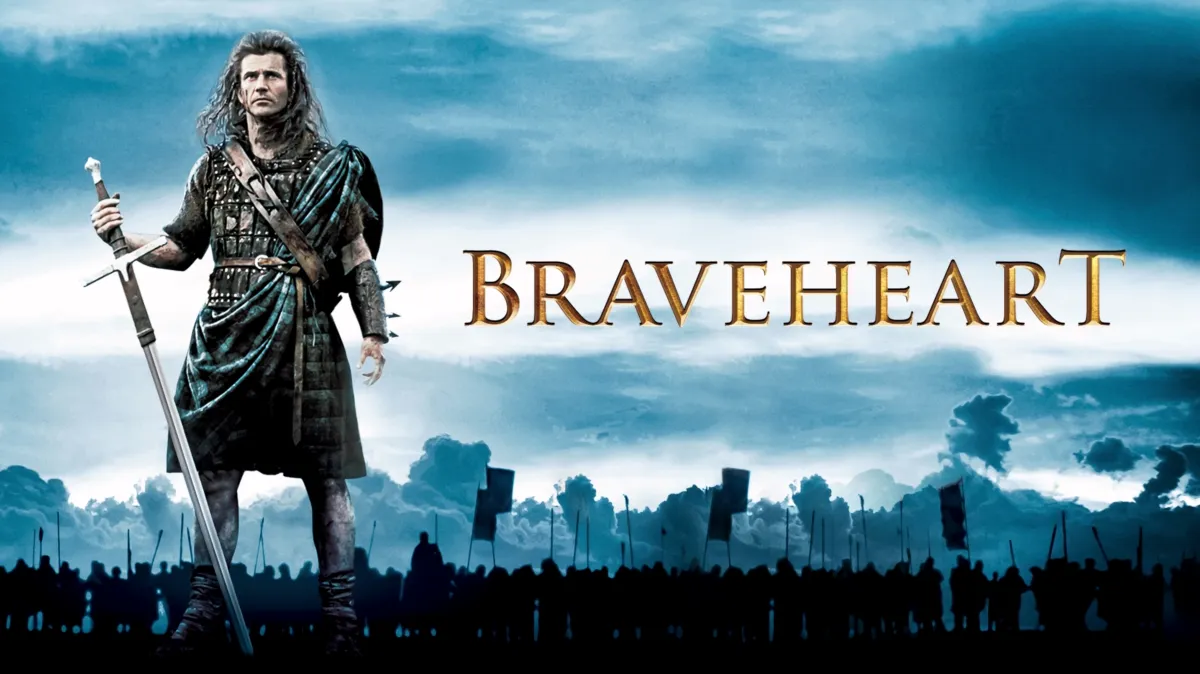
Three hours of guys in skirts beating each other up, and honestly, it’s better than whatever is on TV right now.
Directed by and starring Hollywood heavyweight Mel Gibson, this lengthy production transports audiences back to the late thirteenth century, a brutal era when Scotland groaned under the iron fist of English tyranny. The narrative centers on William Wallace, a simple man whose quest for a quiet life is shattered by personal tragedy, igniting a fiery rebellion that threatens to topple the English crown itself.
Boasting massive battle sequences filmed on location with thousands of extras, the film promises a visceral look at medieval warfare that is definitely not for the faint of heart. Audiences can expect a heavy dose of romance, political betrayal, and a thumping musical score that aims to capture the spirit of a fractured nation fighting for its soul.
Review by Ben Dover
So I fired up my streaming app the other night because the weather was lousy and there was nothing but garbage on network TV. I ended up watching Braveheart, a movie from 1995 that runs for three solid hours. Now, usually, if a movie is three hours long, it better have a halftime show or come with a free cushion for my backside. But I’ve gotta admit, Mel Gibson actually managed to keep my grumpy old eyes glued to the screen for most of it, even if his fake Scottish accent sounds like a guy who had one too many beers at an Irish pub in Perth.
The story is about this guy William Wallace, who just wants to farm some dirt and find a nice girl. Of course, the English king, Edward Longshanks, is a total psycho who decides to ruin everything by killing Wallace’s new secret wife. That gets Wallace ticked off, so he starts a massive rebellion. I can relate to the guy. You mess with a man’s peace and quiet, and you’re asking for trouble. My neighbor’s kid started playing the drums at three in the morning last Tuesday, and I almost went out there with a claymore myself.
Now, the movie is great when people are getting hit in the face with axes, but whenever Mel starts talking about “freedom” in that high-pitched yell, I had to roll my eyes. The youth today seem to love this kind of overly dramatic stuff, probably because they have the attention span of a goldfish and need someone screaming at them to stay awake. And don’t get me started on the romance stuff with the French princess. It slowed the whole thing down to a crawl. I don’t need to see Mel Gibson making puppy dog eyes at a girl who looks young enough to be his daughter while the country is supposed to be at war.
My biggest gripe, though, is the clothes. Why is everyone wearing plaid skirts? I know they call them kilts, but come on. It looks like a school uniform convention got lost in the mud. Plus, Mel’s character walks around with blue paint slathered all over his face. He looks like a disgruntled Smurf who got into a fight at a hardware store. I don’t know much about history, but I’m pretty sure soldiers didn’t go into battle looking like they forgot to wash up after arts and crafts class.
Still, for a movie that’s over thirty years old, it holds up better than most of the garbage they put out today. It’s got grit, it’s got balls, and it doesn’t apologize for being violent. It’s a shame movies don’t have this kind of muscle anymore. Now everything is just people talking about their feelings or flying around in colored spandex.
Starring Roles
- Mel Gibson as William Wallace: Mel plays the big Scottish hero. He’s got great hair in this movie, I’ll give him that, even if he looks a little too old to be playing a young rebel. He spends half the movie screaming and the other half looking sad.
- Patrick McGoohan as King Edward I “Longshanks”: This guy plays the villain, and he is fantastic. He is mean, cruel, and throws people out of windows just for annoying him. Honestly, I kind of respected his no-nonsense approach to management.
- Sophie Marceau as Princess Isabelle: The French princess who falls for Wallace. She’s nice to look at, but her character makes absolutely no sense. She’s supposed to be negotiating peace but ends up passing government secrets to the enemy because Mel smiled at her.
- Brendan Gleeson as Hamish: Wallace’s big, red-headed best friend. This guy looks like he could eat a horse and then ask for seconds. He’s the muscle of the operation and easily the most believable guy on the screen.
Special Effects and Music
The special effects are mostly just real guys hitting each other with fake swords, and it looks terrific. There’s none of that computer-generated garbage that the kids love today where everything looks like a video game. When a horse crashes into a line of spears, you can practically feel the bones snapping. The blood looks like real blood, not red paint, and the limbs flying off look properly gruesome. It’s practical filmmaking, and it puts today’s green-screen nonsense to shame.
As for the music, it’s done by James Horner, and he uses a ton of those Scottish bagpipes. Now, a little bit of bagpipes goes a long way. If you play them for three minutes, it sounds nice and historic. If you play them for three hours, it starts to feel like a dentist is drilling directly into your skull. Every time someone looks out over a hill or thinks about their dead wife, the pipes start wailing again. Lower the volume on the woodwinds, James, we get the point.
Rating
4 out of 5 Stars – A bad hair day and some blue face paint can overthrow an entire empire.
Complete Synopsis and Plot Breakdown
The movie kicks off in thirteenth-century Scotland. King Edward I of England, a real nasty piece of work known as Longshanks, has invaded the country because the Scottish king died without an heir. A young William Wallace sees his father and brother killed in a skirmish against the Englsh. His Uncle Argyle takes him away to grow up, teach him how to speak Latin, and presumably how to use a sword, though we skip all the training and jump right to Wallace returning home as a grown man with a magnificent mane of hair.
Wallace just wants to be a peaceful farmer, but the English are making life miserable. Longshanks introduces a law called “Primae Noctis” which basically means English lords get to sleep with Scottish brides on their wedding night. To avoid this, Wallace secretly marries his childhood sweetheart, Murron. Things go south fast when an English soldier tries to assault Murron, she fights back, and the local English magistrate slits her throat right in the middle of town to make a point.
This turns out to be a very bad move. Wallace goes completely ballistic, rides into town, rides over the soldiers, and chops the magistrate’s head off. The rest of his village joins in, and suddenly Wallace is the leader of a full-blown rebellion. He starts traveling around Scotland, gathering angry peasants and embarrassed nobles, turning them into a makeshift army. They face off against the English at the Battle of Stirling, where Wallace gives a big speech about freedom, uses giant wooden spears to impale the English cavalry, and wins a massive victory despite being heavily outnumbered.
After invading England and sacking the city of York, Wallace gets knighted by the Scottish nobles, but they are a bunch of spineless cowards who care more about their land than their country. Longshanks sends his son’s wife, Princess Isabella of France, to negotiate with Wallace, but she just ends up falling for him and warning him about English traps. At the Battle of Falkirk, the Scottish nobles betray Wallace, abandoning the battlefield. Even Robert the Bruce, the guy who is supposed to be the rightful king, fights on the English side in disguise, though he immediately regrets it after seeing the heartbreak on Wallace’s painted face.
Wallace goes into hiding and spends a few years acting as a rogue assassin, picking off the nobles who betrayed him one by one. Eventually, Robert the Bruce tries to set up a meeting to help him, but Bruce’s treacherous, leprous father sets a trap. Wallace is captured by the English and dragged off to London for a trial. He refuses to submit to the king, so they publicly torture him in the town square. They rack him, disembowel him, and demand he beg for mercy. Instead, he uses his last breath to scream “Freedom!” at the top of his lungs. The movie ends years later with Robert the Bruce leading the Scottish army at the Battle of Bannockburn, finally winning their independence by throwing Wallace’s old sword into the dirt and charging the English line.
5 Famous Quotes
“They may take our lives, but they’ll never take our freedom!” — William Wallace
“The trouble with Scotland is that it’s full of Scots.” — King Edward I “Longshanks”
“Every man dies, not every man really lives.” — William Wallace
“Your heart is free. Have the courage to follow it.” — Malcolm Wallace
“Alba gu bràth!” — William Wallace
Interesting Facts
- The Age Gap: Mel Gibson was nearly forty years old when he filmed this movie, even though his character, William Wallace, was supposed to be a young guy in his twenties during the rebellion.
- The Nickname: The moniker “Braveheart” actually belonged to Robert the Bruce, not William Wallace. Legend has it his heart was carried into battle after his death, earning the name.
- The Reality of Robert the Bruce: He never betrayed Wallace. While Bruce played a pragmatic political game to secure his own eventual claim to the Scottish throne, he openly supported the rebellion and never fought against Wallace.
- The Reality of Primae Noctis: There is absolutely zero historical evidence that this law ever existed in medieval Britain or Europe. It was entirely a mythological trope invented by later writers to make villains look extra evil—and it worked perfectly as a Hollywood plot device.
- The Toddler Princess: In real life, Princess Isabella of France was only about three years old and living across the channel during the events of the Battle of Falkirk, making her secret romance with Wallace biologically impossible. Not only that the movie infers that all subsequent English monarchs are descended from him which is also untrue.
- The Missing Bridge: The famous Battle of Stirling Bridge in the movie was filmed entirely in an open green field. The filmmakers completely forgot or ignored the fact that the entire battle historically centered around, you know, a bridge.
- Time-Traveling Clothes: The tartan kilts and blue face paint worn by the Scots in the film are completely inaccurate for the thirteenth century. The face paint was used by tribes a thousand years earlier, and kilts weren’t invented until centuries later.
- No CGI Here: Braveheart relied on thousands of real extras (including members of the Irish Army Reserve) colliding in brutal, practical, mud-splattered battle sequences
- Extras with Modern Gear: Several of the massive battle scenes had to be re-shot because some of the Irish military reservists hired as extras forgot to take off their sunglasses and wristwatches before charging with their swords.
Photos


Trailer
Review Notes
Very pretty opening with a lot of dialogue I cant understand.
Oh bunch of dead kids…ugh
Man those are some shallow graves.
Breed them out… no way this happened.
I guess dick measuring contests are as old as time.
OK They killed his wife… guess its time to start the movie at 47:20 good, was falling asleep.
Gibsons silence from her death through the takeover was kind of a cool scene.
Gibson sounds vaguely….. Australian.
Lots of turncoats in this movie. turns out thats all fiction.
So… he dead.
Robert Bruce takes over the struggle… (the real Braveheart.)